

Spotify is releasing a voice assistant into its app and the result will be an example of voice and screens working together to make user journeys more streamlined.
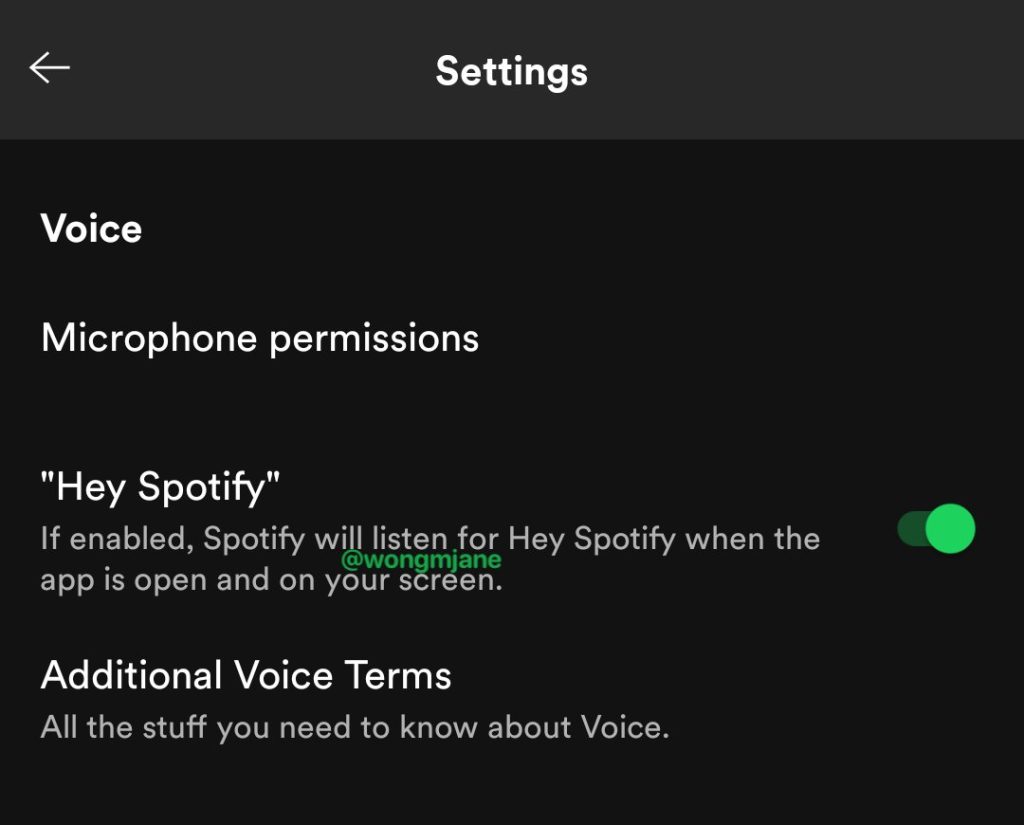
Jane Manchun Wong, found this screenshot in the Spotify app that reads:
“Hey Spotify. If enabled, Spotify will listen for Hey Spotify when the app is open and on your screen.”
Spotify is working on “Hey Spotify” voice activation pic.twitter.com/PqZI01WZre
— Jane Manchun Wong (@wongmjane) March 4, 2020
This is where I see huge opportunities for almost every organisation that has any kind of internet or app presence: using voice to streamline customer journeys and make experiences frictionless.
When you’re playing a song in the Spotify app, to switch to a different playlist or a specific song requires quite a bit of clicking.
Your starting position is usually a screen showing the artist hero image and the play/pause button.
From here, you’d have to:
- minimise the currently playing track
- hit the search bar
- type a search (between 3 and, say, 15 taps, depending on who you’re searching for)
- browse the results (more swiping)
- tap a new playlist or track
That’s 5 screens and quite a lot of tapping and swiping.
The Spotify in-app voice assistant will eradicate all of that by letting you just say ‘Hey Spotify, play the Blackbyrds’.
Using voice to streamline a user journey
In this case, voice isn’t the whole deal like with Spotify on Alexa. Voice is simply filling a gap in order to streamline one part of a user journey. It’s just making one interaction simpler.
It’s the same application of voice that we see in TVs, on set top boxes like SkyQ, TiVo or Comcast.
Rather than using the remote to tap your way through the apps or randomly browse through a list hoping to find something interesting, you can say “Find me a funny film” and you’re half way there.
The user need is the same, the journey is also the same, but a chunk of it has been removed thanks to a VUI.
Following the footsteps of mobile
Although I don’t like to compare voice to mobile, there is a parallel here.
When mobile was in its infancy, before it was the main device for accessing the internet, before we built our internal triggers that now have us literally addicted to our devices, before we picked it up 100 times a day, right when that behaviour was being born, we were talking about ‘micro moments’.
People used to use their phone, not constantly throughout the entire day, but sparingly in certain moments: waiting for the train, sitting on a bus, maybe on the toilet, before a meeting.
And we wouldn’t spend 20 minutes at a time on it like we do now, we’d spend 2 or 3.
At that time, brands were clambering to make connections with users during those micro-moments.
Our usage of voice interfaces seem to be travelling the same way as our usage of mobile did, starting with micro moments. Little times throughout the day where a voice interaction makes sense makes a journey more efficient. Not to replace mobile, but to enhance it.
To consider
This is something to consider for brands and organisations, when thinking about your customer experience and your customer journey across your touch points, can voice play just a small role in helping the whole overall journey be simpler by filling in those little micro moments?